
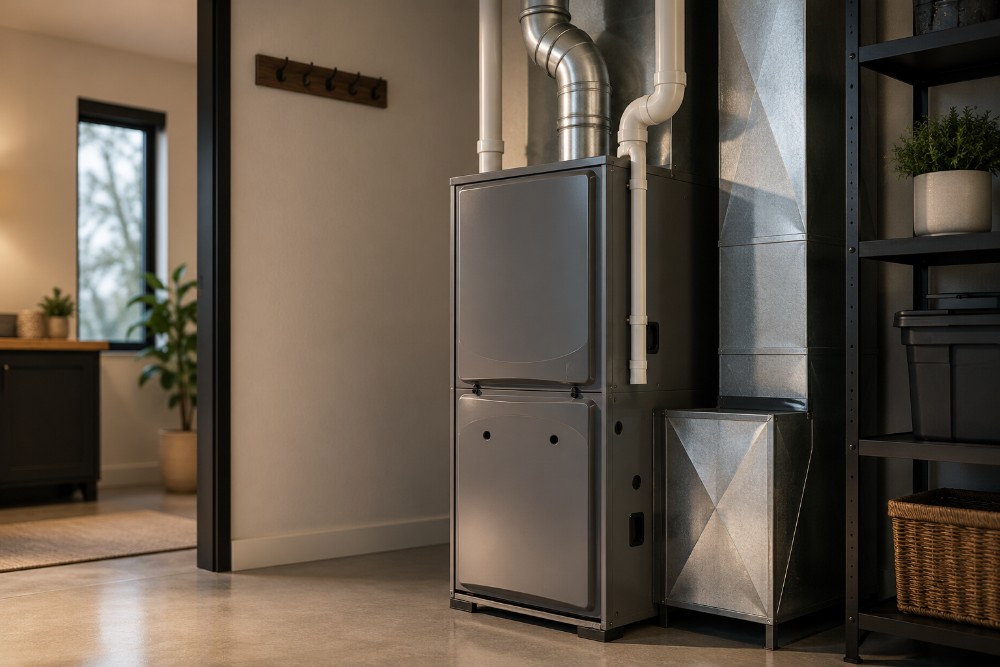
Boilers and furnaces are both common heating solutions, but they distribute heat in fundamentally different ways. Understanding those differences can help you make a more confident decision when it’s time to replace an aging system.
How Furnaces Heat Your Home
Furnaces heat air directly and push it through ductwork using a blower fan, delivering warm air through vents in each room. They’re the more common choice in homes already built with ducted HVAC systems.
How Boilers Heat Your Home
Boilers heat water or produce steam, which is then circulated through radiators, baseboard heaters, or in-floor radiant systems. Rather than moving air, they move heat through your home via water or steam.
Comfort Differences
Many homeowners describe boiler heat as more even and consistent, without the temperature swings some furnace systems produce between heating cycles. Furnaces, however, heat a space faster since forced air responds quickly.
Radiant floor heating, which relies on a boiler, is one of the most consistently comfortable heating methods available, though it requires the right home layout to install effectively.
Installation Considerations
Furnaces require ductwork, which is often already in place in homes built for central air conditioning. Boilers require piping to radiators or baseboard units, which can be more involved to retrofit into a home that doesn’t already have it.
Efficiency and Operating Costs
Both systems are available in high-efficiency models. Boilers often lose less heat in distribution since water holds heat longer than air, but actual efficiency depends heavily on the specific equipment and installation quality.
Maintenance Differences
Furnaces generally require simpler, less frequent maintenance, mainly filter changes and annual tune-ups. Boilers involve additional considerations like water pressure, corrosion, and mineral buildup over time.
Which Should You Choose?
If your home already has ductwork and central air, a furnace is often the simpler and more cost-effective option. If you value even heat distribution, don’t have central air conditioning, or already have radiators or in-floor heating, a boiler may be the better long-term investment.
When to Call a Professional
A technician can evaluate your home’s existing infrastructure, heating needs, and budget to recommend whether a furnace, boiler, or hybrid approach makes the most sense for your situation.