
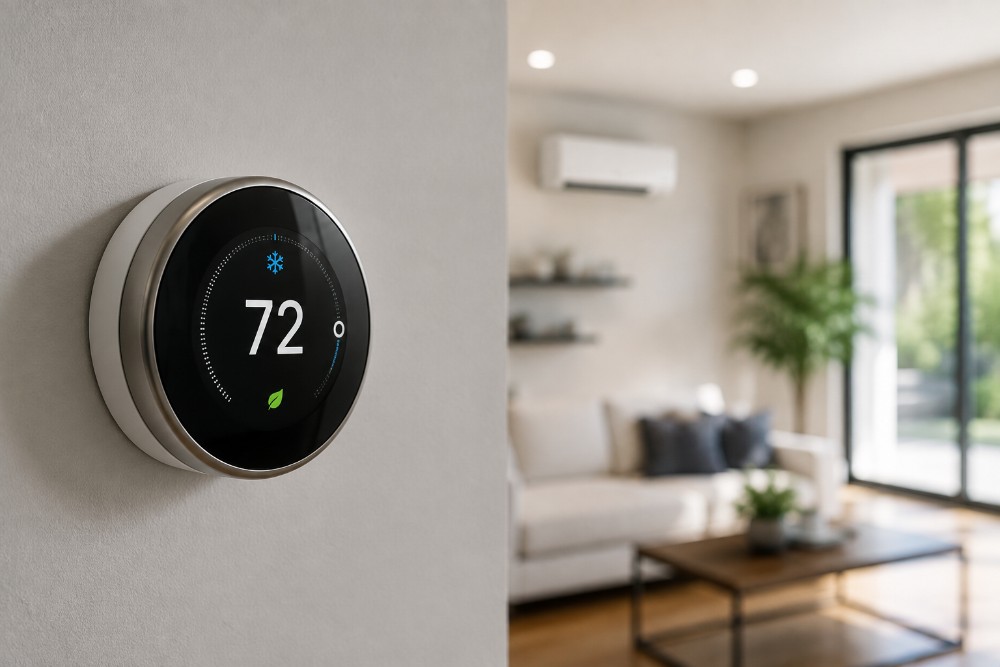
Smart thermostats have moved from novelty to near-standard equipment in new homes, but the upgrade still comes with a real cost. Here’s what to actually expect in terms of savings, convenience, and compatibility before you buy one.
What Makes a Thermostat “Smart”
Smart thermostats learn your schedule, adjust automatically based on occupancy, and can be controlled remotely from a phone app. Many also provide energy usage reports that a standard programmable thermostat simply can’t offer.
Typical Energy Savings
Most manufacturers report meaningful reductions in heating and cooling costs for households that previously used a manual or basic programmable thermostat. Savings are smaller for homes that already used a programmable schedule consistently.
Remote Access and Scheduling
Being able to adjust your temperature from anywhere is convenient, but the bigger value is automatic scheduling, no more forgetting to turn the AC down before leaving for a trip.
The savings from a smart thermostat come from consistency, not just technology. A basic programmable thermostat used correctly can deliver similar results to a smart one used carelessly.
Compatibility With Your Existing System
Not every smart thermostat works with every HVAC system, particularly older systems, heat pumps, or multi-stage equipment. Checking compatibility before purchasing avoids a frustrating return process.
Installation: DIY or Professional?
Many smart thermostats are designed for DIY installation, but systems with unusual wiring, multiple zones, or heat pumps often benefit from professional installation to avoid compatibility issues.
Features Worth Paying For
Geofencing, which adjusts temperature based on your phone’s location, and integration with other smart home devices are among the most genuinely useful features, beyond basic scheduling.
Is It Worth the Cost?
For most households replacing an old manual thermostat, the answer is yes, both for convenience and measurable energy savings. For homes already using a programmable thermostat effectively, the upgrade is more about convenience than dramatic savings.
When to Call a Professional
If your system uses multiple zones, a heat pump, or wiring you’re unsure about, a technician can confirm compatibility and handle installation correctly the first time.
