
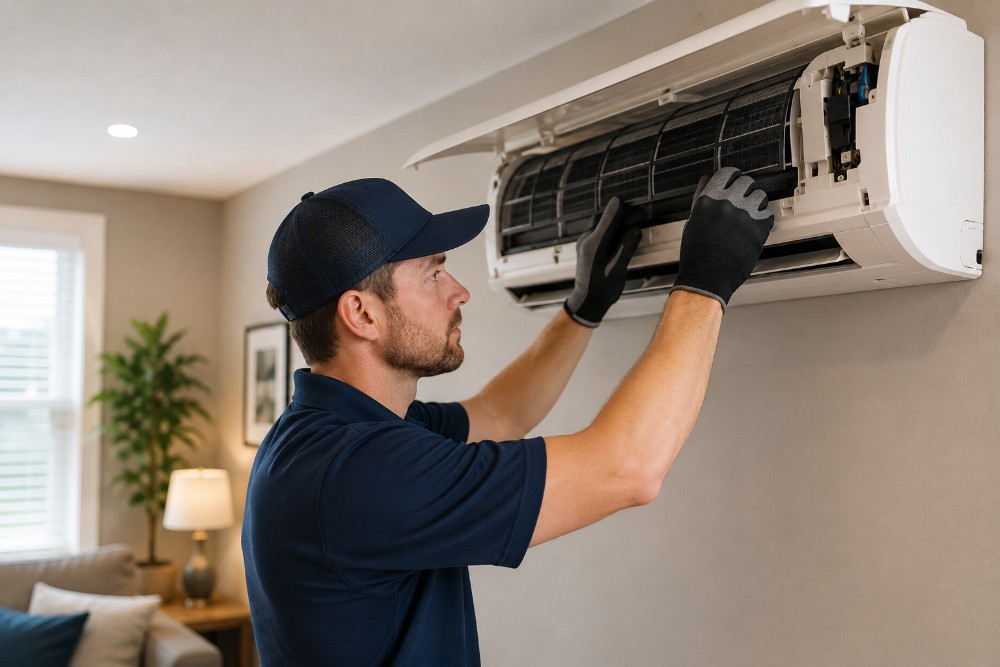
A quiet HVAC system is a healthy one. When your system starts making noises you haven’t heard before, it’s usually trying to tell you something specific, and catching it early can prevent a small issue from becoming an expensive repair.
Rattling Sounds
Rattling often points to loose panels, debris caught in the outdoor unit, or loose hardware inside the system. It’s usually not an emergency, but it’s worth checking before the vibration loosens something further.
Squealing or Screeching
A high-pitched squeal frequently indicates a belt or bearing issue in older systems, or a motor that needs lubrication. This sound tends to get worse over time and is worth addressing promptly.
Clicking at Startup or Shutdown
A single click as your system turns on or off is normal, it’s usually just the relay switching. Repeated or continuous clicking, however, can point to an electrical control issue that needs inspection.
Ignoring unusual noises rarely makes them go away. Most start small and predictable, then become intermittent and harder to diagnose the longer they’re left unaddressed.
Banging or Booming
Loud banging, especially from a furnace at startup, can indicate a delayed ignition where gas builds up before igniting. This is a safety-relevant issue that should be inspected by a technician promptly.
Humming Without Starting
A humming sound with no actual airflow or compressor activity often points to a failing capacitor, which gives your motors the initial jolt of energy they need to start running.
Hissing Sounds
Hissing near your indoor or outdoor unit can indicate a refrigerant leak, particularly if it’s accompanied by reduced cooling performance. This should be inspected quickly, since refrigerant leaks won’t resolve on their own.
Gurgling or Bubbling
Gurgling sounds, especially from a boiler or refrigerant lines, often mean air or moisture has entered a system that should be sealed, requiring a professional inspection.
When to Call a Professional
Most unusual HVAC noises are worth a diagnostic visit rather than waiting to see if they resolve on their own. Catching the cause early is almost always less expensive than waiting for a full breakdown.