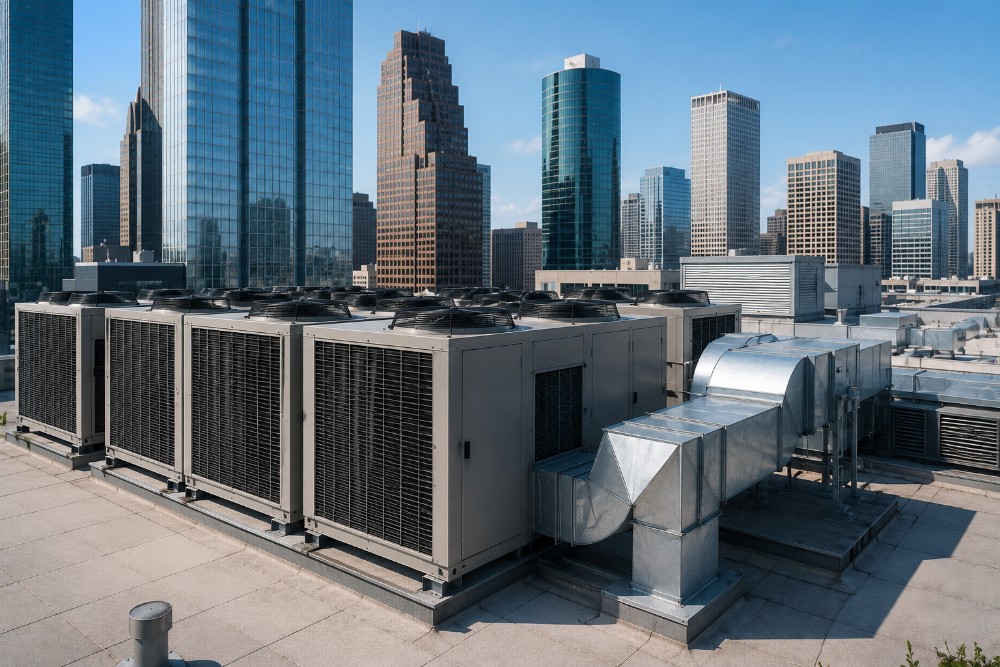

Commercial HVAC systems run harder and longer than residential equipment, often serving larger spaces with tighter uptime requirements. A well-planned maintenance schedule is the difference between predictable costs and unexpected failures that disrupt your business.
Quarterly Inspections for Most Systems
For most commercial buildings, a quarterly inspection schedule strikes the right balance between catching issues early and managing maintenance costs. This is especially important for rooftop units exposed to constant weather.
Bi-Annual Servicing at Minimum
If quarterly visits aren’t feasible for your budget or building size, bi-annual servicing, once before the cooling season and once before heating season, should be considered the minimum acceptable schedule.
Factors That Increase Service Frequency
Buildings with heavy occupancy, restaurants with grease-heavy air, or facilities running equipment continuously typically need more frequent servicing than a standard office space.
Rooftop units face more weather exposure and mechanical stress than indoor equipment, which is why many facility managers schedule them for inspection more often than other system components.
What a Typical Commercial Inspection Covers
A thorough visit includes checking refrigerant levels, inspecting belts and motors, testing electrical connections, cleaning coils, and verifying that controls and economizers are functioning correctly.
The Cost of Skipping Maintenance
Deferred maintenance doesn’t eliminate costs, it shifts them. Systems that go without regular servicing typically fail earlier and require more expensive repairs than those on a consistent schedule.
Building a Maintenance Plan
Facility managers overseeing multiple properties or units often benefit from a documented preventive maintenance plan, which provides predictable costs and priority scheduling for emergency repairs.
Compliance and Documentation Benefits
Beyond equipment longevity, many commercial leases and insurance policies require documented maintenance records, making a consistent service schedule a practical necessity as well as a cost-saving one.
When to Call a Professional
A commercial HVAC provider can assess your building’s specific equipment, occupancy, and usage patterns to recommend a maintenance frequency tailored to your facility rather than a generic schedule.